
Navigating the Complex Interplay
Individualism, Multiculturalism, and the Impact of Identity Politics and Polarization


Individualism and Multiculturalism: Balancing Personal Autonomy with Collective Diversity
Individualism: A Quest for Personal Identity
The emergence of individualism as a dominant paradigm has redefined how we perceive personal identity and autonomy. Individualism, as explored by Fukuyama in "Identity: The Demand for Dignity and the Politics of Resentment", emphasizes personal rights and self-expression. This ethos, deeply rooted in Western societies, is evolving and adapting to the complex demands of an interconnected world (Fukuyama, 2018).
Individualism is not merely a socio-political concept but a psychological framework that shapes our worldviews, influencing everything from political affiliations to cultural and religious beliefs. Haidt's analysis in "The Righteous Mind" delves into how moral foundations guide our individual identities, further intensifying political and religious divides (Haidt, 2012).

Multiculturalism: Embracing Diversity amid Societal Divides
Multiculturalism stands as the counterpoint to individualism, advocating for the recognition and celebration of diverse cultures within a society. However, this noble endeavour faces challenges in its implementation, especially in polarized societies. In Kauff and colleagues’ study published in the Journal of Social Issues showed that multicultural policies could inadvertently heighten tensions between groups, leading to increased segregation and decreased intergroup trust (Kauff et al, 2020).
This cultural evolution, influenced by both individualistic and collectivistic values, reflects the tensions highlighted in Gelfand's work (2011). Furthermore, societies grapple with balancing the celebration of diversity with unity, as discussed by Beck and Levy in the 2013 article "Cosmopolitanized Nations: Reimagining Collectivity in World Risk Society".
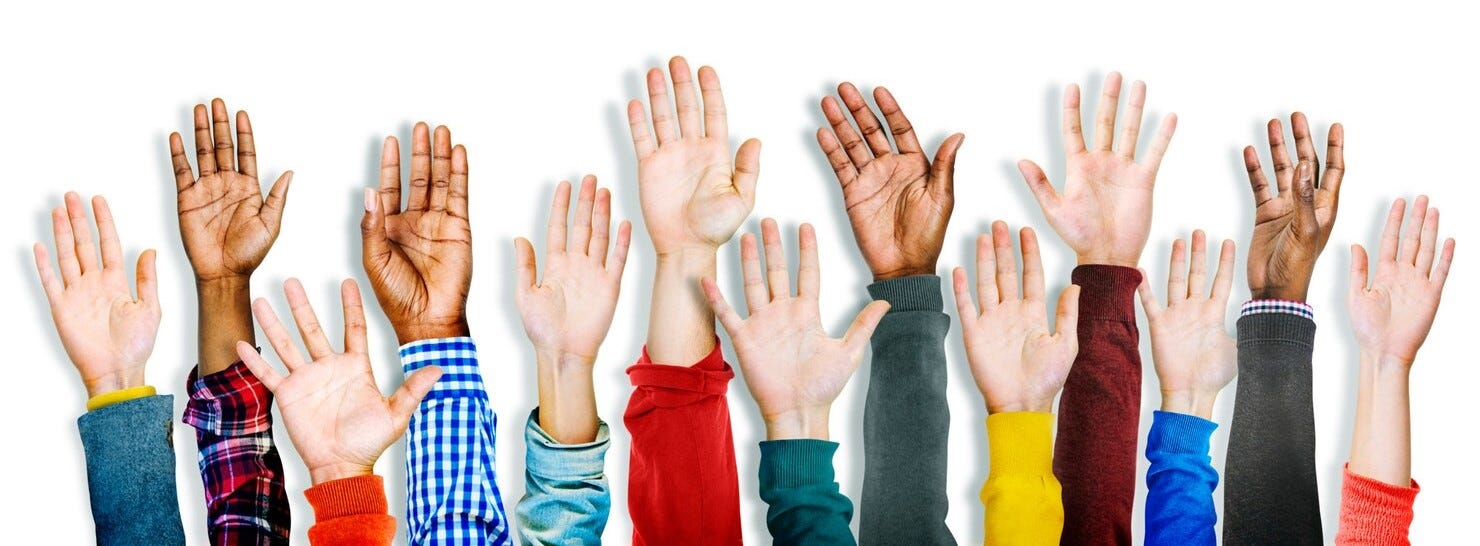
Identity Politics and Polarization: The Intensifying Struggle for Collective Representation
Identity Politics: Advocacy and Alienation
Identity politics has become a pivotal force in shaping the modern socio-political landscape. By focusing on marginalized groups, it seeks to address historical injustices and advocate for equal representation. However, the focus on group identities often clashes with individualistic values, leading to fragmentation and polarization. Norris and Inglehart (2019) in "Cultural Backlash" argue that financial, cultural, social and religious shifts have contributed to the rise of authoritarian populism and radicalism, intensifying these divisions.

Polarization: A Widening Chasm in Society
Polarization, the growing ideological gap between different social and political groups, is reshaping societal discourse and deepening divides. It's not just about differing opinions but a battle over identity, as Mason's 2018 study highlighted. The interplay of forces in politics is increasingly influenced by both identity politics and individualism. The emphasis on individual rights often conflicts with collective cultural narratives, leading to political fragmentation.

Religion and Culture in the Polarized Landscape
Religious institutions and beliefs are reshaped in this context. Norris and Inglehart's work in "Sacred and Secular" show how religious adherence is changing in response to societal polarization, with some individuals seeking more inclusive religious practices, while others retreat into fundamentalism or ideology (Norris and Inglehart, 2011).

Conclusion: Toward an Integrated Future
As societies navigate the complexities of individualism, multiculturalism, identity politics, and polarization, the need for a nuanced understanding becomes vital. Balancing these dynamics requires policy interventions and collective efforts to foster dialogue, empathy, and understanding across diverse groups.
The future lies in navigating these complexities, ensuring that our societies are diverse, united, resilient, and harmonious. It's a call to action to ensure that our screens serve us and that our time online enhances rather than diminishes our real-world experiences and well-being.

References:
Beck, U., and Levy, D. (2012). Cosmopolitanized Nations: Reimagining Collectivity in World Risk Society. FMSH-WP-2013-27. February 2012.
Fukuyama, F. (2018). Identity: The Demand for Dignity and the Politics of Resentment. Farrar, Straus & Giroux.
Gelfand, M.J., Raver, J.L., Nishii, L., Leslie, L.M., Lun, J., Lim, B.C., Duan, L., Almaliach, A., Ang, S., Arnadottir, J., Aycan, Z., Boehnke, K., Boski, P., Cabecinhas, R., Chan, D., Chhokar, J., D'Amato, A., Subirats, M., Fischlmayr, I.C., Fischer, R., Fülöp, M., Georgas, J., Kashima, E.S., Kashima, Y., Kim, K., Lempereur, A., Marquez, P., Othman, R., Overlaet, B., Panagiotopoulou, P., Peltzer, K., Perez-Florizno, L.R., Ponomarenko, L., Realo, A., Schei, V., Schmitt, M., Smith, P.B., Soomro, N., Szabo, E., Taveesin, N., Toyama, M., Van de Vliert, E., Vohra, N., Ward, C., Yamaguchi, S. (2011). Differences between Tight and Loose Cultures: A 33-Nation Study. Science, pp. 1100-1104, 332(6033), 1100-1104. doi: 10.1126/science.1197754. Erratum in: Science. 2011 Aug 19;333(6045):937. PMID: 21617077.
Haidt, J. (2012). The Righteous Mind: Why Good People Are Divided by Politics and Religion. Vintage.
Kauff, M., Beneda, M., Paolini, S., Bilewicz, M., Kotzur, P., O'Donnell, A.W., Stevenson, C., Wagner, U., & Christ, O. (2021). How do we get people into contact? Predictors of intergroup contact and drivers of contact seeking. Journal of Social Issues, vol. 77, pp. 38-63. https://doi.org/10.1111/josi.12398
Norris, P., & Inglehart, R. (2011). Sacred and Secular: Religion and Politics Worldwide. 2nd edn. Cambridge: Cambridge University Press (Cambridge Studies in Social Theory, Religion and Politics). doi: 10.1017/CBO9780511894862.
Norris, P., and Inglehart, R. (2019). Cultural Backlash. In Cultural Backlash: Trump, Brexit, and Authoritarian Populism (pp. I-Ii). Cambridge: Cambridge University Press.
Peterson, D. A. M. (2019). “Uncivil Agreement: How Politics Became Our Identity Lilliana Mason, Chicago: University of Chicago Press, 2018, pp. 192.,” Canadian Journal of Political Science/Revue canadienne de science politique. Cambridge University Press, 52(4), pp. 961–962. doi: 10.1017/S0008423919000076.